How Local Media Can Use 3D Tours to Increase Ad Revenue
By Declan Murphy · Published · 4 minutes read

Local news sites are fighting for every ad dollar. Banner ads and sponsored posts still work, but they're crowded and easy to ignore. A growing number of publishers are finding that 3D virtual tours—interactive, walk-through versions of local businesses and landmarks—can be a premium add-on that clients actually want to buy.
This article breaks down how to package, price, and sell 3D tours as part of your local media ad lineup. You'll get realistic cost ranges, a comparison table of ad products, and a simple chart showing where the revenue comes from. No hype, just what's working for small and mid-size publishers.
Why 3D tours fit local media ad stacks
Local advertisers—restaurants, gyms, real estate offices, museums—want to stand out. A 3D tour lets a customer 'walk in' before they visit, which builds trust and increases time on page. For you, that means a higher-value ad unit that isn't commoditized like display banners. You can sell it as a standalone product or bundle it with a sponsored article or newsletter placement.
Engagement numbers back this up. Tours typically keep visitors on a page for 1–3 minutes, compared to 15–30 seconds for a standard article. That extra attention is exactly what advertisers are paying for. And because the tour lives on your site, you capture the traffic and the ad revenue, not a third-party platform.
The production cost is also within reach for most local media budgets. Basic tours run $300–$800 per location, and you can often resell the same tour to the business for their own website as part of a package. That double-dip improves your margins.
- Higher engagement than static ads
- Premium pricing without premium production costs
- Resellable asset for both publisher and advertiser
Packaging and pricing 3D tour ads
Start with a simple three-tier menu. The entry tier is a single-location tour embedded in a sponsored article, priced at $500–$1,200. The mid tier adds a homepage promo and social boost for $1,500–$3,000. The top tier bundles a tour, a video walkthrough, and a newsletter feature for $3,500–$6,000. These ranges reflect what small publishers are charging in 2024–2025.
Remember to factor in your costs: shooting, editing, hosting, and sales time. A typical tour takes 2–4 hours to capture and 3–5 hours to process. If you outsource, expect to pay $300–$800 per tour. If you do it in-house, your main cost is staff time. Aim for a 50–70% gross margin on the package.
You can also offer a revenue-share model: the business pays a smaller upfront fee, and you split any leads or bookings the tour generates. This lowers the barrier for hesitant advertisers and aligns incentives.
- Entry: $500–$1,200 (sponsored article + tour)
- Mid: $1,500–$3,000 (adds homepage and social)
- Top: $3,500–$6,000 (adds video and newsletter)
- Aim for 50–70% gross margin
| Ad product | Typical price | Avg. time on page | Renewal rate | Production cost |
|---|---|---|---|---|
| Display banner | $200–$800/mo | 10–20 sec | 40–60% | None |
| Sponsored article | $500–$1,500 | 30–60 sec | 50–70% | $50–$150 |
| 3D tour (entry) | $500–$1,200 | 1–3 min | 60–80% | $300–$800 |
| 3D tour (mid) | $1,500–$3,000 | 1–3 min | 65–85% | $300–$800 |
| 3D tour (top) | $3,500–$6,000 | 2–4 min | 70–90% | $500–$1,200 |
Selling tours to local businesses
Don't lead with '3D tour.' Lead with the problem: empty tables on Tuesday nights, low foot traffic, or a new location that people haven't discovered yet. Then show a demo tour on your phone. Seeing is believing—once a business owner swipes through a tour, they get it.
Target businesses that already invest in marketing: restaurants with active social pages, real estate agencies, fitness studios, and tourist attractions. These are more likely to have a budget and understand the value of visual content. Use your own site's analytics to show how long visitors stay on tour pages versus regular articles.
Offer a pilot: a discounted first tour in exchange for a testimonial and permission to use them as a case study. After two or three local success stories, sales get much easier.
- Lead with the business problem, not the tech
- Demo on a phone or tablet during the pitch
- Target businesses already spending on marketing
- Use a discounted pilot to build case studies
Production and workflow
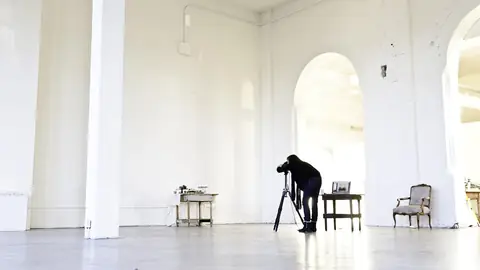
You don't need a film crew. A 360-degree camera (like a Insta360 or Ricoh Theta) costs $300–$500, and free or low-cost stitching software handles the rest. For most local businesses, 8–15 panorama points are enough to cover the space. Shooting takes 30–60 minutes on site.
Editing is the bigger time sink. Budget 2–4 hours per tour for stitching, adding hotspots, and embedding your branding. If you're producing more than four tours a month, consider hiring a freelance editor or training an intern. Hosting can be done on your own CMS or through a specialized platform; expect $10–$50 per month per tour for hosting and analytics.
Standardize your process: a shot list, a client questionnaire, and a delivery checklist. This keeps quality consistent and makes training new staff easier. For a deeper walkthrough, see our step-by-step guide on creating a 3D tour for a local landmark.
Measuring results and proving ROI
Advertisers want to know what they got. Track tour views, average time on tour, hotspot clicks (e.g., 'call now' or 'view menu'), and any lead form submissions. Most tour platforms provide these metrics. Share a simple one-page report with the client each month.
On your side, measure the impact on your own ad revenue: how many tours you sold, average deal size, and renewal rate. A healthy renewal rate is 60–80% after the first year. If it's lower, your reporting or the tour quality may need work.
Use the data to upsell. A restaurant that gets 500 tour views and 30 menu clicks is a prime candidate for a larger package next quarter.
- Track views, time on tour, and hotspot clicks
- Send a monthly one-page performance report
- Aim for 60–80% renewal rate
- Use results to upsell larger packages
Avoiding common pitfalls
The biggest mistake is treating tours as a one-off project. They need to be part of your regular ad menu, with a clear sales sheet and a production schedule. Another pitfall is overpromising on results—tours are a tool, not a magic bullet. Be honest about what they can and can't do.
Also watch your costs. If you're spending more than 30% of the package price on production, your margins will suffer. And don't neglect mobile: most tour views happen on phones, so test every tour on a small screen before delivery.
Finally, keep the client involved. A quick approval on the tour before it goes live avoids rework and builds trust.
- 3D tours command premium prices ($500–$6,000) while costing $300–$800 to produce, yielding strong margins.
- Sell the business outcome, not the technology—demo on a phone and lead with local success stories.
- Track tour engagement and share monthly reports to boost renewals and upsells.
- For a full production workflow, see creating a 3D tour for a local landmark.
Declan writes about app development and digital tools for local media. He has hands-on experience building news apps and enjoys explaining technical topics in plain language. He is passionate about helping small publishers compete online.